Friday, June 7, 2013

PLANTS DON'T HAVE BRAINS...HOW CAN THEY THINK?

In my last post on this topic ( 5/3/13),  I introduced this subject with some speculation on the meaning of "thinking," and how it might be defined in a way that could, conceivably, include the plant kingdom.  I proposed a definition of thinking as some type of integrational process that could produce an action (usually but not always movement) based on acquired information.

I also showed you some videos of plants moving;  what did you think of that last one, where the taller plant appears to be beating down its neighbor?   Who knew?

So plants CAN move, and often do quite vigorously.  Also,  sometimes with what appears to be discrimination, such as the carnivorous sundew, which does not respond to bits of dirt or leaf caught in its tentacles, only to a good dinner.


 Or the vining stem that grows toward a support, only to grow the other way if the pole is moved to the other side.  [Sorry, couldn't find a video of this, but several times I've read that it happens.  Could be a good project for someone...check out  http://www.chlorofilms.org/ ]

Evolution has equipped them to do many wondrous things.  For instance, they can design, color, and scent their flowers to mimic insects or insect food, thus attracting pollinators.  They enclose their seeds in packages appetizing to animals, or build them with cunning grippers that can't be avoided.  (Terence McKenna once said,  "Plants invented animals to move their seeds around." )  They can employ certain species of insects to protect them,  or selectively exclude predators while welcoming non-dangerous bugs.

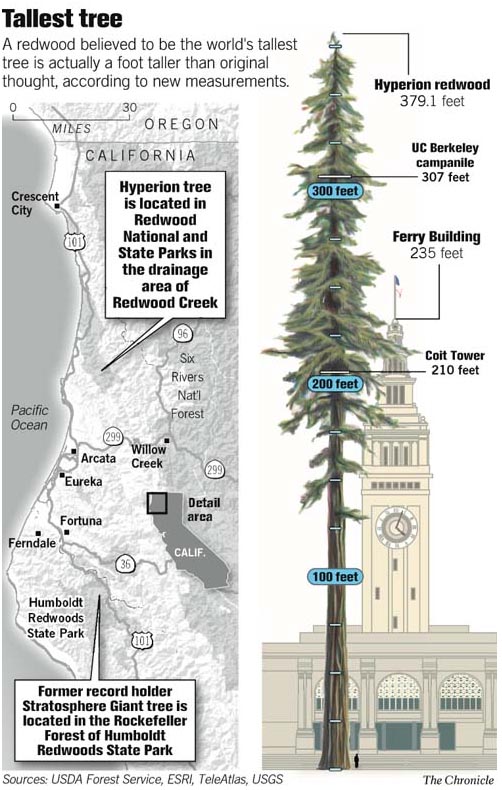
Their construction principles of fibers wrapped in spirals,  and cells linked in almost unbreakable cords, principles that are still undeveloped by human technology, allow them to erect and provision structures over 350 ft. high.
 Or consider plants  that cover acres,  such as the  Pando aspen in Utah, which appears to our eyes as a grove of 106 acres, but which has been shown to actually be one plant weighing over 13 million pounds, all connected by an immense  webwork of roots.


Yes, evolution had equipped them to do these wondrous things...what if they've been equipped to do things  of which we are as yet unaware.  Take roots for instance.  Measurements of a single rye plant show over 13 million rootlets with  a combined length of 380 miles,  and if you add together all the roothairs on all the rootlets, you come out somewhere around 14 billion with a combined length of 6,600 miles,  nearly the distance from pole to pole.  And that's just one little rye plant;  imagine the numbers involved for your backyard shade tree.  Big numbers, but is there more?   Are plants doing anything with all those billions of roots besides growing and sucking up water and nutrients?  Is it just a meaningless coincidence that an image of a root system looks very much like an image of an internet diagram?  Check out this video of  Stefan Mancuso on TED.com.

http://www.ted.com/talks/stefano_mancuso_the_roots_of_plant_intelligence.html


Recent research using the most advanced imaging systems has found that the cells in the "transition zone" of the root apex - the area at the tip of the root hair - not only consume oxygen at a rate similar to neurons,  but they also have structures and chemicals completely analogous to those found in animal neurons.

           BALUŠKA, F., MANCUSO, S., VOLKMANN, D. & BARLOW, P., Root apices
as plant command centres: the unique ‘brain-like’ status of the root apex
transition zone. Biologia, Bratislava, 59/Suppl. 13: 1—, 2004; ISSN 0006-
3088.
Although plants are generally immobile and lack the most obvious brain activities of animals and humans, they are not only able to show all the attributes
of intelligent behaviour but they are also equipped with neuronal molecules,
especially synaptotagmins and glutamate/glycine-gated glutamate receptors.
Recent advances in plant cell biology allowed identification of plant synapses
transporting the plant-specific neurotransmitter-like molecule, auxin. This
suggests that synaptic communication is not limited to animals and humans
but seems to be widespread throughout plant tissues. Root apices seated at
the anterior pole of the plant body show many features which allow us to
propose that they, especially their transition zones, act in some way as brainlike command centres. The opposite posterior pole harbours sexual organs
and is specialized for plant reproduction. Last but not least, we propose that
vascular tissues represent highways for plant nervous activity allowing rapid
exchange of information between the growing points of above-ground organs
and the brain-like zones in the root apices.
      
[http://ds9.botanik.uni-bonn.de/zellbio/AG-Baluska-Volkmann/plantneuro/pdf/NeuroPlantTZ-Biologia.pdf]

People have known for a long time that plants communicate, using chemical substances instead of sound waves,  and recent observations have pointed to plants using the underground webs of fungus mycorrhzal structures as a message transportation system.

Can it be that there's even more going on?  In following posts on this subject,  I'm going to present some intriguing observations and speculations on plants and what may be going on with them.  Pandora may not be as fictional as you think!
                                                                                                                   (by Marlie Graves)


Tuesday, May 21, 2013

Setting up a plant for maximum ease of care and beauty


Excerpt from THE COLOR OF YOUR THUMB HAS NOTHING TO DO WITH IT


WATERING ONE-OH-ONE

Up to now we've been talking about how to determine the amount of moisture in the soil, as well as other factors to consider in deciding whether or not to water your plants.  But before we talk about how much water to put in, let's consider the mechanics of putting the water and your plants together.

Face it, your plants can't get to water on their own - you have to bring it to them.  Part of that bringing is the potting system the plants are sitting in, and part is the equipment and technique you use to pour on the water.  (Yes, if you can believe it, I even have something to say about how you pour water.)

                             POTTING ARRANGEMENTS

All plants are placed in one of two ways: either they're direct planted - roots are planted directly into a large soil environment, such as outdoors, or in an indoor atrium or large planter box; or they're potted - roots and some kind of medium to hold them are enclosed by some kind of container.

If they're potted, they may be single or double potted.  If single-potted , they're growing out of the visible container, which sits in a drainage saucer of some type, unless the container itself is water-tight.

If double-potted,  the grow pot  (the container, usually plastic, in which the plant was grown) sits inside a drainage liner, and both sit inside a decorative container.

The advantages of double-potting are many.  If you want to remove the plant from the decorative container, because you want to replace it with a different plant, it needs treatment, etc,  you just pick it up and there you are.  When watering, you just watch for the run-off in the liner, which allows you to regulate water more exactly (more about that in a minute), and also does not limit you to only using containers that have  holes in the bottom.


Professional interior landscapers almost always use the double-potting method.  When they do, they  cover the top of the grow pot, and often the entire surface inside the decorative container, with a decorative mulch, most commonly Spanish moss,  sheet moss, bark chip, or rock.

This mulch has no horticultural value, it is purely cosmetic, although most people find it works best when some of the soil is left exposed to insure good evaporation of water.  It's easy to do at  home,  and adds greatly to the attractive appearance, especially of larger house plants.

The most important part of this arrangement is the liner, which in effect becomes the reservoir for the plant.  Professional interior landscapers operate on a schedule, which requires the plants be serviced every week, every ten days, or every two weeks (for most reputable companies.)  The liner must hold enough water to fill the plant's needs,  making sure it doesn't get over-dry between waterings.  However, there must also not be too much water - the plant has to be able to use all of the water in the liner well before the tech's next visit, thus reaching its ideal % of aeration.

                           HANGING PLANTS

Let's consider  hanging plants, which are sort of a special class.   When you buy one from a store, it comes in a hanging commercial grow pot, which has open drainage in the bottom, and works perfectly in a greenhouse, not so well in a home.  Many people bring these home and hang them up as is, then take them down and carry them to the sink to water, and drain.   Fine, if you have the time.

If you're interested in less time spent on more beautiful plants, you'll want to use waterproof hanging bowl containers.  You can double-pot your plant into this, and when you want to water, just lift up your water can,  tip in the spout, being careful that it's not splashing off any leaves,  and pour/count.

Thus ends this excerpt from TCOYTHNTDWI 

(Sounds like something from a Sci-Fi story, doesn't it..T'coy Thndtwi, medical ofiicer aboard the inter-dimensional explorer Frglyss.)  (Soon as The Ficus Wrangler project is up and running on its own, I'll be able to turn my attention to completing and attempting to publish some of my SF.)

Speaking of which, you might be wondering, how is that FW project going.  I'm glad to report that the web site is nearing completion, and we hope to have it online by the end of June, with at least some video  available for purchase.

The text for the first - and longest - chapter of the book is done; all that remains is to add the graphics and photos. and it too will be available for purchase.

I know there are some folks reading this blog....have any of you ever commented anywhere?  Don't be shy.  Leave a comment in the comment spot!  You can't imagine how I'd love to hear from you.  As a member  of the Down With Dead Houseplants Movement (DWDHM? Wonder what I can make from that.), you are entitled to speak on up.

Till next time,
Bona Fortuna to you, and good growing always.
                                                                                                      (by Marlie Graves)


Tuesday, May 14, 2013

Do plants really have it in for your cats?


Today I have some words to say about cats and plants living within the same walls.

Often I see, on forums and comments and even some blogs, people saying they can't have plants because the cats eat them all, or they can't have cats because they don't want their plants ruined.  Also, whenever the subject of cats and plants comes up, someone is sure to chime in with the most recent list of "Plants Toxic to Cats," accompanied by finger waggling and admonishments to move all these dangerous plants to some place inaccessible to cats.
                                                                                                 Pizzicato among the plants

Trouble is, when you look at these lists, almost all common indoor foliage plants are on it.  And the plants that aren't on it are ones that cats, at least my cats, like to eat.  Hm-m-m...strange, isn't it.

I've had many cats, and many houseplants, for the better part of half a century.  I've never had a cat die from eating any plant.  Barf, yes...die, no.  I know many people with cats and houseplants.`I don't know anyone who's had a cat die from eating a common houseplant.

I think a small reality check may be in order here.  A. Cats (and dogs and horses and all sorts of animals) have walked this Earth a long time, surrounded by plants that are on those "toxic" lists, and they neither stand around munching on them, nor are they falling over in great numbers from doing so.

B. Adam and Eve were not given a list of toxic plants and told to construct fencing around all plants on that list to keep the cats and dogs away from them.

C. The toxic lists were compiled by feeding or otherwise administering plants, or substances derived from plants, to captive animals until they sickened and died.  The captives had no choices in the matter.

D. Given a choice, very few cats (or dogs, presumably) will eat these toxic plants.  I'm guessing they taste bad.

E. In discussions of plants and animals, there always seem to be people who've had animals die from eating one plant or another.  I have to wonder if it is absolutely proven that these animals died from eating these plants, and if it is possible that the animal had an extreme allergic reaction, like people who have an extreme reaction to a bee sting. (No one has ever suggested that such people never go outdoors again, or that bees should be eradicated, even though there have actually been a few people who have died from a bee sting.)

My experience has been that, while cats will bite into leaves of many plants, they don't actually eat them. The ones that they do eat, I don't keep in my house.  I don't keep palms, or spider plants inside, because the leaves get reduced to small stubs.  For a long time I didn't keep ficus trees, because they were used as scratching posts, until I got the bright idea to wrap the trunks with double-side sticky tape.

 A while ago I thought I'd try some begonias, so I bought a couple of 3" size, one with colorful leaves and one with green leaves.  The cats immediately started chomping the stems of the green-leaved one, but they totally ignored the burgundy leaves. Out went the green one to the porch, but the red one is quite lovely in the sunroom.

Then I thought I'd try ferns.  The Boston fern was a mass of 3" stems in a few days - the gatos got a kick out of biting through the stems and dropping them on the floor.  Out went the Boston fern.  However, the rabbit's foot fern they have no interest in, so it has happily joined the collection inside.

The moral of the story is, if you want cats and plants, you can have both, you just need to experiment to find
what the cats will leave alone.  I think you should be aware of the toxic lists, and if you have a plant on that list and your cat or dog is actually ingesting it, you probably should move the plant where they can 't reach it.

But a plant that is being eaten is not going to look very nice anyway,  so why would you want to keep it where little teeth can get to it?  Unless of course you're raising some grass or greens specifically for the cats to eat.  Many people do this, and it's a lovely idea, and very healthy for your pet.  I've tried sprouting things for my cats to eat too,  but they've never been interested.

They prefer that I go out to the yard and pick them their favorite grass - I had to try 5 or 6 different grassy things that were growing out there before I found the one they liked.  Fortunately I don't have a fancy, mono-culture sort of lawn, and I don't use pesticide or herbicide.  But I do have happy cats.
                                                                                                                 (by Marlie Graves)


Thursday, May 2, 2013

The First Secret of the Green Thumb: Feel The Soil

We're going to start with water, because it's basic to everything, and if you understand watering you'll understand plantcare.


CHAPTER 1 - TO WATER OR NOT TO WATER...

Ninety percent of successful plant care is making the correct watering decisions.  There are a number of variables in the environment of indoor plants - light, temperature, humidity, soil, etc; but water is the variable over which you have the most control.  If the moisture-to-air ratio in the soil is on target, the plant is healthy, it looks good, and it has the natural resources to resist disease and  pests.


If the plant is not looking good, the first thing to investigate, and the most important to adjust, is soil moisture


If the soil is too wet or too dry, the roots can't function properly, and the plant starts to fail; too wet,  the plant is drowning, too dry and it's starving to death.

YOU HAVE TO FEEL THE SOIL

This is the AAA,  the First and Foremost,  the Most Especially Important Secret of the Green Thumb! You have to feel the soil so you know how much water is already in there - not to mention soil quality, soil composition,  and simply vibin' with your plant.  After using this system for awhile, when you're familiar with your plants' conditions and water requirements, you'll find it impossible to water without at least touching the soil surface to make sure all is going as it should, and that no one has been pouring behind your back.

Your most important tool is your fingers.  As you start to familiarize yourself  with soil moisture, push a spoon deep into the pot, well past  half way to the bottom; if you have a bigger plant, you'll need to use a big spoon, or a garden trowel. Bring up a small scoop of soil.  Squeeze it between your fingers, observe how it looks, and how it feels.  

If you've never been able to quite understand the variations between "wet" and "dry",  or if you're not sure if what you mean by "moist" is the same as what someone else means, here's a little thing you can do at home.

Take a small handful - a couple of tablespoons - of potting soil or potting medium, the kind you are using, or plan to use, for your plants.  Make sure it is completely dry; you may have to microwave it awhile, or let it sit around for a few days.  Then put it into a small bowl, and pinch some between your fingers.  This is "dry," this is what people mean if they use the term "completely dry." Now start adding water a little at a time - about  1/4 teaspoon - and stir it around well.  Let it sit for a few minutes after each addition of water, to allow the particles in the soil to absorb the water.   Pick up a little soil and squeeze it after each portion of water has been absorbed ,  try to feel how it changes from the barest hint of moisture to soft and cool to dripping wet. 

------------------- end of excerpt from The Color of Your Thumb Has Nothing To Do With It -----------

In the full text, and also in the video version of the text, there is a Moisture Chart   that lists the moisture levels from 1-10, describes what they feel like and how you can refer to them.   The text and video will be available for purchase on the yet-to-be-launched website, on a chapter-by-chapter basis.  The videos that are available on YouTube are trailers for the complete videos, and I hope some of you will be interested in adding the entire production to your libraries.  I'll be letting you know about the website as we get closer to launch date.  Also more short videos coming soon.  I hope.

Be part of the Down With Dead Houseplants movement!  Pass on the Ficus Wrangler to your plant-challenged friends!
                                                                                                    (by Marlie Graves)


Friday, April 19, 2013

On the subject of what ARE your plants thinking...


I suppose that before we can talk about WHAT plants are thinking, we need to consider IF they think.  You may think it's pretty obvious that they don't - no one has ever found anything even remotely resembling nerves or brain in any plant anywhere.  Have they?

Since definitions of thinking mostly involve mind (generally understood as brain) and/or acts of contemplation, imagination, decision, movement and so on, right there, plants are exempted - and plants are quite obviously rooted in place, so are unable to perform "acts" of any kind, right?

Well, okay, they do grow, and turn toward the light, and sometimes tendrils can wind around things, and some petals can close at night...but those things are all just cellular responses to simple stimuli like light and touch, right?

They're not "acts" like when you decide to go somewhere so you move your muscles and you get there.  Leaves move when the wind blows them, but that's just moving because the wind is moving, nothing to do with action or volition or anything like that, right? The other kinds of movement you see in plants is pretty much the same, right?

Well maybe...and then again, maybe not.

Let's think about it <<<>>>> what exactly are we doing?  What is "thinking" anyway?  We're pretty sure it's occurring in our brains; we know from imaging and scanning that certain parts of our brains "light up" when we think of certain things, or think about them in certain ways; and we know that if brains are injured, some types of thinking can be changed or cease to function.

But consider this...it wasn't so very long ago that people had no idea what all that mushy stuff inside heads was for.  If they thought about it at all, they thought that thinking originated in the heart, or maybe the solar plexus - that old "gut feeling," you know?

If you come right down to it, we don't REALLY know what's happening in the brain, how the electronic/chemical stimulation of cells interacts in a perception/memory/integration/abstraction interface to produce thought and action, whether it be the simple thoughts of a worm, or the towering thoughts of a human being.  Some theorists are even beginning to wonder if "thinking" might be going on at the molecular level, or even the quantum level, and that the brain is simply a switching station.

Back to the original question - do plants think? (By the way, this is a really huge topic, and I'm going to be batting it around for a long time, so if anyone else has any thoughts/information, feel free to throw them in.)  Let's define thinking (at least at this point) as the  process of acquiring information from/about the outside world by the stimulation of certain receptors (cells or aspects of cells, probably), that information then translated (somehow) into actions that allow the organism to respond (somehow) to the outside world in ways that are contributory (hopefully) to its survival.

By using this kind of definition, I'm getting away from the idea that "thinking" necessarily involves "words."  It does, however, involve ACTIONS based on INFORMATION.   Plants definitely acquire/take in information, (something to talk about at a future time,) but do they actually perform any actions, other than simply "growing?"  (Which isn't so simple, when you come down to it.)

Other than those few things I mentioned earlier, what kinds of actions could they possibly perform?  Well, in order to understand plant movement, you need to adjust your own perceptions.

Ever seen those fast-action films of plants growing and flowers opening?  In them you see that plants move to the beat of a drum different than that which animals follow. 


As you slow down to their score and measure, you see the twigs and buds on trees and bushes swinging in slow circles,  leaves on plants below moving up and down as their growing tips quest 360 degrees around, flowers bending and shaking, stems trembling toward unseen supports and sending out tendrils that dance complicated patterns until they encounter something to grab onto, at which point they quickly pull the rest of the plant to themselves.

Beneath the ground, tiny rootlets burrow through the earth, tasting for moisture and nutrients, responding to the pull of gravity, possibly other imperatives known only to the plants.  Seeds burst open, roots hurrying down, stems shooting up in frantic haste to reach the light.


  The movement of the stomata on leaves as they transpire air into and out of the plant, when speeded up, looks remarkably like  breathing...probably because it is breathing.

Then there are the incredibly fast movements (fast enough for us to see in real time, which means really really fast in plant time) of carnivorous plants closing on their prey, or the Mimosa pudica folding its leaves when they are touched.  Some plant tendrils respond to weights as slight as .00025 of a gram.   How can they do these things when the have no nerves to transmit stimuli, and no muscles to contract tissues?

In my next post on this subject I'll speculate some more about plant actions, and also how they might acquire and process information about their environments.  Leaving you with an interesting little video... 

http://www.dnatube.com/video/3359/Plant-Growth-and-Movement


Some links to other videos of plant movement:

http://s3.amazonaws.com/scifri-videos/lrg-cucumber2-083112.mp4

http://www.teachersdomain.org/asset/lsps07_int_plantmovies/


Major source material, The Secret Life of Plants  by Peter Tompkins and Christopher Bird.  Available from Amazon.

                                                                (by Marlie Graves)

Friday, April 5, 2013

Pruning that ceiling-hitting plant on my Pinterest board Home Interiors with Plants on 4/5/13

So sorry there's no pic - you'll just have to refer back to Pinterest.  I tried for 30 mins to find the original page, or to find some way to copy from my pin, all to no avail.  And I have a rule, which is no more than 30 mins devoted to fruitless searches.  Ergo, after 30 mins, no pic.  But I directed folks here for a discussion on pruning the darn thing, so discuss I shall.

As best I can tell from that one picture, the plant is a Dracaena tarzana.  It's often hard to tell from just one shot what exactly a plant is, but even if it's some other kind of dracaena, even some kind of yucca, the culture and pruning practices are the same.

The first thing to decide before you set out to prune a plant is 'how do I want it to look when I'm done?'  The choices here would be tall, or short, and one cane, or more than one.  (The long trunky, or stemmy thing is actually called a cane in these type of plants.)  I think I'll describe the procedures for each of these choices in turn.

Before I begin, let me note that cane-type plants are great to do these kinds of procedures on, because they are so vigorous, and can sprout from dormant buds even when they appear to have been dried out and dead for years.  One time I built a short, decorative fence by embedding a bunch of old corn plant canes in the ground.  Don't you know, after about six months, my fence began to sprout!  But I digress.

The elegant, horticultural thing to do would be to air layer.  Arm yourself with a sharp knife, some damp sphagnum moss, some plastic wrap, rooting hormone, and electrical tape.  Pick the point where you want the roots to start growing, say about seven feet from the top of the plant - that will give you a six foot tall plant after it's potted.  Oh yes, don't forget to sterilize the knife with dilute bleach solution.  Now, scrape away the top of the bark all the way around the cane, in a strip about 1" wide.  Gently, now, only the very top part, the  skin, so to speak.

Uh-oh, uh-oh, I hear some of you starting to cringe.  Cutting?  MY PLANT???  Okay, here's what you need to understand - cutting a plant, in terms of pain to the cuttee, is approximately the same as cutting your hair or fingernails...There.Is.None.  It makes the plant more beautiful, if you do it right.  If you don't, the plant just keeps on growing, and you get to try again another time.

Back to scraping the top layer of bark.  After you've done that, rub a bunch - maybe 1/2 teaspoon - of the rooting hormone into the scraped area, and wrap it with moss.  The moss should be damp, but not soaking - squeeze out all the water that will go.  Wrap it into a nice fat clump all around the cane, then wrap plastic wrap around that, and secure the top and bottom tightly with the tape.  There.  You're done.  Don't you feel accomplished?

Now, you and your plant just wait for a few months.  Just keep an eye on the moss, if you see it's starting to look dried out, undo the tape and pour in a couple of spoons of water.  But it should stay moist until the roots grow.  If you want to see what all this looks like, try https://www.google.com/search?q=air+layering&hl=en&rlz=1C1CHUE_enUS486US486&tbm=isch&tbo=u&source=univ&sa=X&ei=g0lfUcG0HYK88ASCmYHoDw&ved=0CEEQsAQ&biw=1024&bih=475.

When the roots have nicely filled the bag of moss, cut the cane below the moss bag to free your now-shortened plant.  This is probably the hardest part of the process, because some canes are thick and quite hard, and you may have to use a hand saw to do the cutting.  Pot the plant with its new roots and shorter cane into your pre-selected beautiful container, or even better, into a plastic grow pot that you can place into your pre-selected beautiful container.  This is called 'double potting,' and I have a video about that at http://www.youtube.com/watch?v=kG9PImILzh8

A word about soil.  Please don't use those "moisture-retentive" mixes that some manufacturers are marketing.  They do retain moisture, but that's a bad thing, because too much moisture in the soil is what kills most indoor plants.  Use a cactus mix if you want, or a "soilless mix" if you can find it, or do some research and make a nice chunky, porous mix of your own.   Try this http://forums2.gardenweb.com/forums/load/houseplt/msg0100030212371.html?11  to start research.

If your plant is already 10' tall, though, I think you probably have a good handle on its cultural requirements, and you already know about porous mixes and not overwatering, so I'll return to the pruning stuff.   Now, if you want your plant to end up short, say 3 or 4 feet,  do the air layering thing much closer to the foliage head; remember, you'll eventually be sticking about a foot of the cane-with-roots into the pot.

But what about the multi-cane thingy?  This involves the not-difficult strategy of sticking one end of the cane, or piece of cane,  into moist soil, and then being patient.  As long as the soil is kept barely damp, the cane should  sprout - not always, not every one, but a surprisingly high proportion of the time.  In fact, you don't have to air layer at all, you can just cut the cane below the foliage, then bury the cut end in the soil.  It's best to air layer a valuable plant, though, because roots might not form quickly enough to support all those beautiful  leaves.

So okay,  back at the big tall plant (or short, fat plant, if that's the way you shaped it) that you air layered into  its new version, you've still got a long bare cane sticking out of the pot.  Left to itself, it will probably sprout a bunch of new leaves, and keep right on growing.   Or you could cut the long cane into 2 or 3 pieces - different lengths look best- put them back into the soil with the rooted piece, and see what happens.  You can even cut the long cane into very short pieces, about 2" -  each piece needs at least 1 scar where a leaf used to be - lay them horizontally under the soil, and wait for them to sprout.

So you can make yourself two new plants from the old one, or a whole bunch of new plants...next year's Christmas presents for all your friends!  Please don't be afraid to prune.

Till next time,
Marlie - The Ficus Wrangler
                                                                                               (by Marlie Graves)


"


Tuesday, March 12, 2013

Talking about light levels and what those words low, medium, high actually mean.

Hi.  Today I thought I'd try changing the appearance of the text, mess with color, and all that.  How do you like it?


The fourth type of information you need to make watering decisions is the amount of light the plant is getting. This is, incidentally, another Secret of the Green Thumb:

THE MORE LIGHT AVAILABLE, THE MORE WATER IS USED
                        Conversely,
THE LESS LIGHT AVAILABLE, THE LESS WATER IS USED

When there's plenty of light, the plant's factories are humming along at high speed and using lots of water; when the light is low, the activity level is correspondingly low, and so is the use of water.

Also, high light intensifies evaporation of water from the soil, as well as from the leaves; when the light is low,  evaporation drops.

    So how do you know what level to call the light?

High light is what you would find next to a window where direct sunlight comes in for two hours or more per day, usually a south or west window.

Moderately high light would be near a window with no direct sun, or sun less than two hours per day, usually a north or east window, or a high-light spot that's filtered by curtains, trees, etc  into a low-light spot.)

Medium light is a general condition of working light found in most offices, under which you can easily read.

Moderately low light is a situation in which you can still read, but you wish you had a little more light.

Low light is where you can read, but not for very long.

And if you can't read in the spot, there's not enough light for any plant; this light level is otherwise known as none at all (from the plants' point of view, of course.)

------------end of excerpt from THE COLOR OF YOUR THUMB HAS NOTHING TO DO WITH IT

This short video also brings up the important point that you're going to water more when the light is higher, and less when the light is lower, and super, super important -

 the major trick to keeping plants in low light is to allow them to get dry all the way to the bottom of the pot.

There's also a discussion about why you need to know what kind of plant you have - so you can find out what level of light the plant needs.
                                                                                          (by Marlie Graves)